
Best Practical AI Ebooks for Beginners
Seven practical books for understanding generative AI, writing stronger prompts, applying the tools to real work, and judging their limits. Book 01 is the strongest all-round starting point; the remaining selections cover foundations, ChatGPT practice, structured prompting, workplace use, leadership, and critical evaluation.
Go directly to the numbered list7 best practical AI ebooks for beginners
Begin with Book 01 for the strongest all-round starting point, or follow the numbered sequence until you reach the AI skill or decision you need.
of 07
Ebook, print, and audio editions available
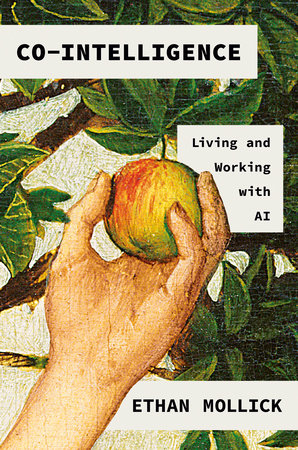
Co-Intelligence
This is the strongest overall introduction to working with generative AI without treating it as either magic or a replacement for judgment. Mollick presents AI as a co-worker, co-teacher, and coach. The practical value is a mindset: invite AI into suitable tasks, learn where its frontier currently sits, and keep the human responsible for the goal, the evidence, and the final decision.
Why it belongs here
It gives a beginner a durable way to experiment across writing, analysis, learning, and creative work before getting trapped in one platform's buttons.
Know before reading
This is a framework and practice guide, not an interface-by-interface manual. Specific models and features change, so current product documentation still matters.
- Use AI across different tasks to discover where it helps and where it fails.
- Define the human goal, context, constraints, and success standard first.
- Treat confident output as a draft to inspect—not as automatic authority.
- Preserve human judgment, identity, and accountability in the final work.
of 07

Available in digital and print formats
Generative AI For Dummies
This is the broad beginner map for understanding what generative AI can create and how to put it to work. It covers text, imagery, audio, video, tool selection, prompt writing, research assistance, and personal or professional productivity. That breadth helps a new user see the landscape before deciding which application deserves deeper practice.
Why it belongs here
Beginners often know one chatbot but not the wider category. This book connects different media, tasks, and tools into one accessible foundation.
Know before reading
A broad survey cannot document every platform in depth, and feature examples can age. Focus on the principles of task choice, prompting, review, and responsible use.
- Match the AI tool and output type to the task you actually need to complete.
- Write prompts with a clear goal, useful context, constraints, and output format.
- Iterate on weak results instead of expecting the first response to be final.
- Check facts, privacy, permission, and copyright before reusing an output.
of 07

Second edition available digitally
ChatGPT For Dummies, 2nd Edition
This is the concrete practice guide for learning core generative-AI habits inside one widely used tool. It moves from the basics of ChatGPT into prompting, text and media generation, research assistance, content review, real-world projects, and fact-checking. A beginner can use it to turn abstract AI ideas into repeated daily practice.
Why it belongs here
Learning becomes easier when the practice environment stays consistent. The book lets a beginner improve task definition, prompting, revision, and verification in one place.
Know before reading
It is platform-specific, and ChatGPT's interface and capabilities continue to change. Use current product documentation for exact feature access and button locations.
- Start with a specific task and explain the outcome you want.
- Supply context, constraints, source material, and examples where useful.
- Break complex work into smaller stages that can be reviewed separately.
- Fact-check claims and inspect the final output before relying on or publishing it.
of 07
Digital edition available through O'Reilly
Prompt Engineering for Generative AI
This is the next-step selection for moving from casual chatting to deliberate, reusable prompt design. The book begins with five useful principles: give direction, specify format, provide examples, evaluate quality, and divide labor. It then shows how those principles extend into text, image, code, evaluation, retrieval, and automated systems.
Why it belongs here
It explains why prompts work, how to test them, and how to turn an improvised request into a repeatable process with explicit quality standards.
Know before reading
O'Reilly classifies it as beginner to intermediate, but later chapters become substantially more technical. New readers can master the opening principles before RAG, agents, and code.
- Give the model a precise direction instead of a vague topic.
- Specify the structure, tone, length, and format the result must follow.
- Use examples to demonstrate the pattern that instructions alone cannot capture.
- Separate work into stages and evaluate each result against visible criteria.
of 07

Available in digital and print formats
Microsoft Copilot For Dummies
This is the workplace selection for applying AI inside software many beginners already use. It focuses on Copilot-friendly prompts and productivity across Microsoft tools, including familiar work such as drafting in Word, analyzing in Excel, presenting in PowerPoint, managing messages, and supporting projects.
Why it belongs here
It connects AI to concrete documents, spreadsheets, presentations, and communication rather than leaving the beginner with isolated chatbot exercises.
Know before reading
It is most useful if you actually work in Microsoft's ecosystem. Features can depend on the product, account, subscription, administrator settings, and region.
- Use the active document, workbook, or message as relevant context.
- Ask for outputs that can be traced, checked, and revised.
- Review calculations, summaries, data references, and factual claims yourself.
- Understand licensing, access, and organizational data rules before use.
of 07

Digital and print editions available
The AI-Savvy Leader
This is the leadership selection for making AI serve a real strategy rather than becoming a technology project without ownership. De Cremer centers familiar leadership work—vision, communication, execution, people, and accountability—and applies it to responsible AI adoption. It is especially useful when a beginner must make decisions for a team, not only for personal productivity.
Why it belongs here
AI adoption changes roles, workflows, incentives, trust, and responsibility. The book keeps those organizational questions connected to the technology decision.
Know before reading
This is not a hands-on prompting manual or a technical machine-learning guide. Its value is strategic judgment, governance, communication, and execution.
- Begin with a business or human problem—not with a tool that needs a use.
- Define ownership, governance, review, and accountability before scaling.
- Involve the people whose work will change and communicate the purpose clearly.
- Measure operational value, worker impact, risk, and failure—not adoption alone.
of 07
Ebook and print editions available
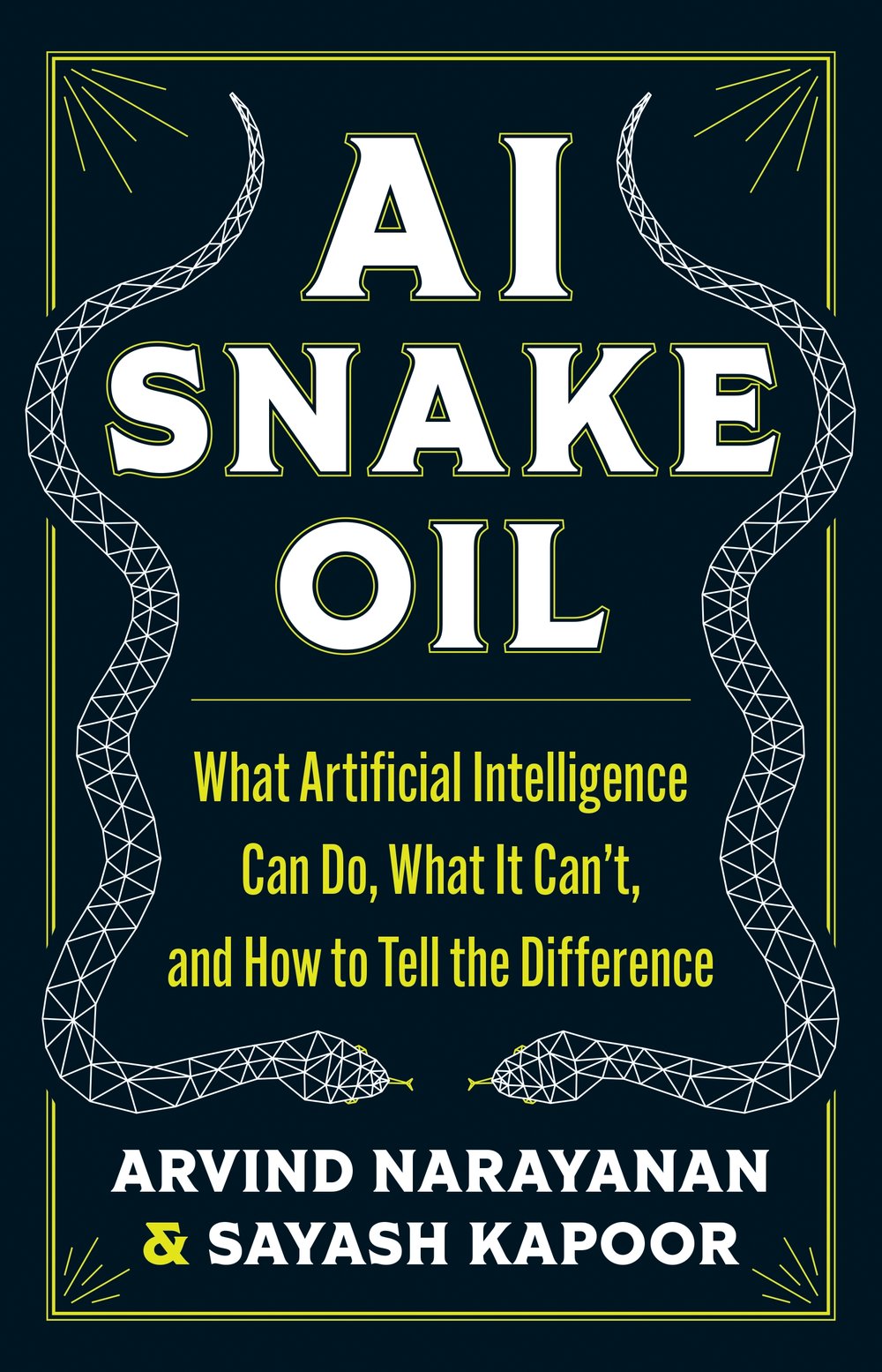
AI Snake Oil
This is the critical-literacy selection for distinguishing useful AI from confident marketing, unsupported prediction, and harmful deployment. Narayanan and Kapoor separate different kinds of AI, examine why some systems work better than others, and show how inflated claims can affect high-stakes areas such as hiring, education, banking, insurance, medicine, and criminal justice.
Why it belongs here
A practical beginner needs defenses as well as techniques. The book supplies questions for evaluating evidence, incentives, error, accountability, and real-world harm.
Know before reading
This is not a prompt workbook or software tutorial. It is the counterweight that helps a beginner decide when an AI claim deserves trust, testing, skepticism, or rejection.
- Ask whether a system is generating content, predicting behavior, or making a decision.
- Demand evidence that matches the population, setting, and claim being made.
- Examine who absorbs errors and whether affected people can challenge a decision.
- Do not mistake technical confidence, scale, or branding for demonstrated accuracy.
Choose your first practical AI book
You do not need to read all seven at once. Start with the featured selection that matches how you learn best.
Co-Intelligence
Choose this for a clear, practical mental model of AI as co-worker, coach, and creative partner—with human judgment still accountable.
Generative AI For Dummies
Choose this for a structured tour of text, image, audio, video, prompts, tool selection, everyday productivity, and responsible use.
ChatGPT For Dummies
Choose this when you want to learn by doing inside one familiar tool: prompt, revise, research, create, fact-check, and improve.
Why these seven books
BeeVaults built a learning pathway rather than stacking seven books that repeat the same promise. The list progresses from a beginner's mental model and broad foundation into hands-on practice, structured prompting, workplace application, responsible adoption, and the ability to recognize exaggerated AI claims.
Related BeeVaults entries
Continue from AI literacy into practical prompting, automation, and digital-product strategy.
Before choosing an AI ebook
Which AI ebook should a complete beginner read first?
Start with Co-Intelligence if you want a practical way to think about working with AI while keeping human judgment in charge. Choose Generative AI For Dummies if you prefer a broader step-by-step map of tools, media types, prompts, and everyday use.
Do I need coding experience to use these AI books?
No coding is required for the three featured selections, Microsoft Copilot For Dummies, The AI-Savvy Leader, or AI Snake Oil. Prompt Engineering for Generative AI begins accessibly but becomes more technical in its later chapters.
Will practical AI books become outdated quickly?
Interfaces, model names, and individual features can change quickly. The most durable lessons are task definition, context, iteration, evaluation, workflow design, privacy, and human accountability. Use current vendor documentation for exact interface steps.
Can AI-generated information be trusted?
Treat an AI answer as a draft or hypothesis, not automatic proof. Verify factual and high-stakes claims against authoritative sources, protect confidential information, and keep a human responsible for the final decision.
Have a digital publication to document?
Create a BeeVaults listing for your e-book, manual, guide, report, or digital knowledge product.