
Books About Trading Psychology and Emotional Discipline
Seven practical books for thinking in probabilities, accepting losses, diagnosing emotional patterns, strengthening routines, and protecting decision quality under pressure. Book 01 is the strongest all-round foundation; the remaining selections address daily self-coaching, recurring tilt, discomfort with loss, emotional information, deliberate practice, and the biology of risk.
Go directly to the numbered list7 best books about trading psychology and emotional discipline
Begin with Book 01 for the strongest all-round foundation, or follow the numbered sequence until you reach the trading problem you need to solve.
of 07
Ebook, print, and audio editions available
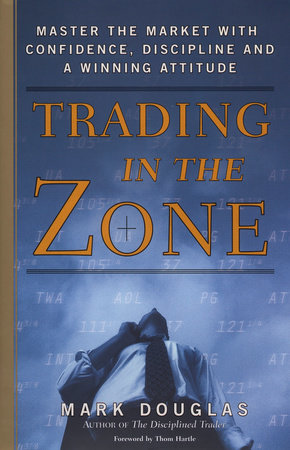
Trading in the Zone
This is the strongest starting point for understanding uncertainty without turning every outcome into a judgment about yourself. Douglas explains why a valid trading edge can still produce an unpredictable result on any single attempt. The practical shift is from needing to be right now to executing the same risk-defined process across a meaningful series of trades.
Why it belongs here
Many emotional mistakes begin when a trader expects certainty from a probabilistic environment. The book gives clear language for separating an individual result from the quality of the decision that produced it.
Know before reading
Psychology cannot manufacture an edge or replace position sizing, stops, and testing. Some of the language is broad and philosophical, so translate each idea into a specific rule you can review.
- Define the risk before entry and accept the full planned outcome.
- Evaluate an edge across a series—not from the result of one trade.
- Stop asking the market to confirm your intelligence or identity.
- Judge execution against the plan before judging profit or loss.
of 07

Ebook and print editions available
The Daily Trading Coach
This is the practice-oriented selection for turning trading observations into small, repeatable changes. Its modular lessons cover goal setting, journaling, cognitive and behavioral techniques, pattern interruption, and performance review. Instead of waiting for motivation, the reader builds a routine for noticing a problem, choosing one process goal, testing an adjustment, and reviewing evidence.
Why it belongs here
Emotional discipline improves through repeated preparation and review. The short-lesson structure makes the book useful beside a journal, where one idea can become an experiment rather than another piece of advice.
Know before reading
Do not rush through all 101 lessons. Work slowly, apply only what matches your evidence, and remember that this is neither a signal service nor a substitute for a validated trading strategy.
- Keep a journal that records both decisions and psychological context.
- Set one specific, observable process goal for each session.
- Use cognitive and behavioral techniques to interrupt old patterns.
- Turn review data into a routine you can repeat and measure.
of 07

Ebook, softcover, and audio editions available
The Mental Game of Trading
This is the diagnostic selection for traders who know the rule they broke but keep repeating the same mistake. Tendler treats emotional errors as patterns with triggers, thoughts, escalation, actions, and consequences. That structure helps a trader move past labels such as “greedy” or “undisciplined” and identify the specific belief or pressure underneath chasing, overtrading, cutting winners, or freezing.
Why it belongs here
Generic advice rarely resolves a recurring pattern. The book offers a system for mapping what happens before control is lost and inserting a correction while the problem is still manageable.
Know before reading
The method requires honest records, repetition, and willingness to examine root causes. It will not repair an untested trading method or make oversized risk psychologically safe.
- Map the trigger, thoughts, emotion, action, and cost of each pattern.
- Look beneath fear, greed, anger, and confidence for the root cause.
- Prepare a correction strategy before pressure begins to rise.
- Track the earliest signs of escalation instead of waiting for tilt.
of 07

Digital and print editions available
Best Loser Wins
This is the pressure selection for examining how the urge to avoid pain can produce poor exits, premature profits, and uncontrolled recovery trades. Hougaard argues that trading requires a different relationship with discomfort: a planned loss is not a personal failure, while protecting an open winner simply to feel relief can conflict with the trade's logic.
Why it belongs here
The book confronts the emotional asymmetry between taking a loss and allowing a winning trade room to develop. It is useful for examining what a trader does when money and identity feel threatened.
Know before reading
The author writes from high-stakes discretionary experience. Do not copy his position sizes or risk exposure. Adapt the mindset ideas only inside your own tested method and strict personal limits.
- Treat a small planned loss as an operating cost—not an emergency.
- Do not cut a valid winner merely to remove temporary anxiety.
- Rehearse behavior before market pressure tests your intentions.
- Keep risk small enough to execute the plan without imitation or bravado.
of 07
Ebook and print editions available
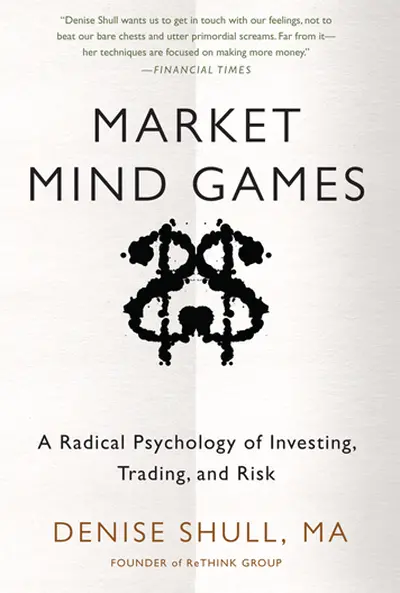
Market Mind Games
This is the emotional-information selection for readers who have been told that good decisions require feeling nothing. Shull presents emotion as part of how people perceive context, uncertainty, and risk. The useful question becomes neither “How do I obey this feeling?” nor “How do I erase it?” but “What is this state telling me, and does the evidence support action?”
Why it belongs here
Suppression can hide information until it becomes impulsive behavior. The book offers a contrasting lens: name the emotional state, examine its source, and use awareness to improve—not replace—analysis.
Know before reading
Emotion as data does not mean acting on every feeling. The neuroscience and psychodynamic framing may feel conceptual, and any intuition still needs experience, evidence, and risk controls.
- Treat feelings as information to examine, not commands to obey.
- Label the current emotional state before placing or changing risk.
- Separate experience-based intuition from impulsive urgency.
- Protect psychological capital after stress, surprise, and loss.
of 07

Digital and print editions available
Enhancing Trader Performance
This is the expertise-development selection for moving beyond willpower and treating trading as a skill that can be trained. Steenbarger connects performance psychology with finding a suitable trading niche, breaking execution into trainable components, using feedback, and practicing under conditions that reveal specific weaknesses. It complements his daily coach by focusing on the architecture of long-term development.
Why it belongs here
Some “discipline” failures are actually mismatches between trader, market, timeframe, and method—or skills that have never been practiced deliberately. The book helps distinguish those problems from motivation alone.
Know before reading
It is most useful once you have some trading records and experience to analyze. Deliberate practice can strengthen execution, but it cannot validate a method with no demonstrated edge.
- Find a performance niche that fits your strengths and constraints.
- Break execution into mechanics, tactics, and strategic decisions.
- Use deliberate practice, coaching, and rapid feedback loops.
- Measure skill development as well as short-term profit and loss.
of 07
Ebook and print editions available
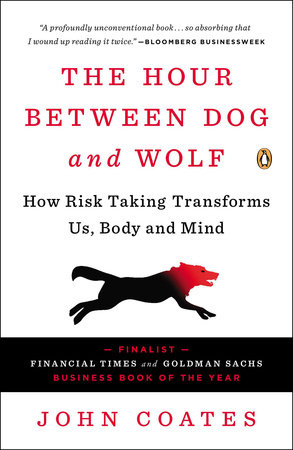
The Hour Between Dog and Wolf
This is the physiological selection for understanding why risk decisions are made by a body as well as a conscious mind. Coates, a former trader and researcher, examines how winning streaks, losses, stress, fatigue, hormones, and physical state can change confidence and appetite for risk. The value is recognizing that discipline also depends on recovery and exposure—not only better self-talk.
Why it belongs here
A trader may interpret physiological arousal as market insight or personal certainty. The book expands risk awareness to include sleep, stress load, fatigue, and the feedback loop between results and behavior.
Know before reading
This is explanatory science rather than a step-by-step workbook. Many examples center trading-floor biology, so use them as a lens for observation without overgeneralizing every claim to every trader.
- Recognize that risk exposure can alter physiology and judgment.
- Watch for winning streaks that amplify confidence and position size.
- Treat sustained loss, stress, and fatigue as decision-quality risks.
- Use sleep, fitness, recovery, and exposure limits as risk controls.
Choose the right first book
You do not need to read every book in order. Use these three common trading problems to choose a different entry point after reviewing the complete list.
Trading in the Zone
Choose this when a single win or loss changes your confidence, you resist uncertainty, or you struggle to think across a series of trades.
The Daily Trading Coach
Choose this when you want short lessons, a journal-driven routine, and practical ways to become your own performance coach.
The Mental Game of Trading
Choose this when fear, anger, greed, tilt, or confidence errors repeat even though you already know the technical rule you broke.
No book can guarantee profitability or replace a tested edge, position sizing, stop rules, transaction-cost awareness, and independent professional advice where appropriate. Psychology helps a trader execute a sound process; it does not create one by itself.
Why these seven books
BeeVaults built a complementary pathway instead of stacking seven books that repeat “be disciplined.” The list moves from probability and risk acceptance into daily self-coaching, emotional diagnosis, loss behavior, deliberate practice, and the biology that can alter judgment under pressure.
Related BeeVaults entries
Continue from individual discipline into crowd emotion, habit design, and the broader BeeVaults knowledge registry.
Before choosing a trading psychology book
Which trading psychology book should a beginner read first?
Start with Trading in the Zone if you need a foundation in probability, uncertainty, and accepting risk. Choose The Daily Trading Coach if you prefer short exercises, journaling, and a structured daily practice.
Can trading psychology alone make a trader profitable?
No. Psychology can improve how consistently a trader follows a tested process, but it cannot create a positive trading edge, repair poor risk sizing, remove fees and slippage, or guarantee profits.
How can a trader interrupt revenge trading after a loss?
Predetermine a maximum loss and a mandatory pause, record the trigger, and resume only if written checklist conditions are met. Repeated rule-breaking is a reason to reduce size or end the session—not to trade harder.
Should a disciplined trader try to eliminate emotion?
No. The practical goal is to notice emotion early, understand what it may be signaling, regulate arousal, and keep execution tied to precommitted risk and process rules rather than impulsive relief-seeking.
Have a digital publication to document?
Create a BeeVaults listing for your e-book, manual, guide, report, or digital knowledge product.