
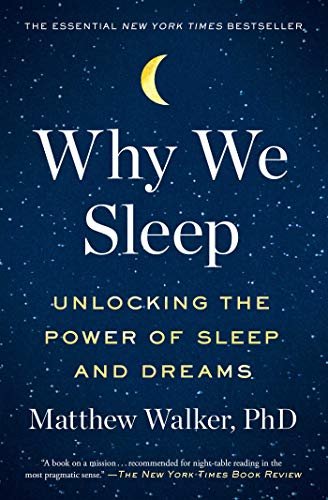
Why We Sleep: Unlocking the Power of Sleep and Dreams
Summary
Why We Sleep explores sleep as a fundamental biological process that supports both the brain and the body. Matthew Walker explains what sleep is, how its architecture changes through the night and across the lifespan, and why periods such as non-REM and REM sleep contribute differently to learning, memory, emotional regulation, creativity, and restoration.
The book also examines what happens when sufficient sleep is repeatedly lost, connecting sleep deprivation with impaired attention, decision-making, mood, physical health, and everyday performance. From there, it turns to dreams, sleep disorders, modern habits and institutions that interfere with sleep, and practical changes intended to help people give sleep a more deliberate place in their lives.
Scope
The book moves from the biology and architecture of sleep into circadian rhythms, sleep pressure, caffeine, REM and non-REM sleep, changes in sleep across the lifespan, learning, memory, emotion, physical well-being, and the consequences of insufficient sleep. It also explores dreaming, insomnia and other sleep disorders, common approaches to sleep treatment, the effects of sleep loss across society, and practical ideas for improving sleep.
Reader Fit
It is written for general readers who want an accessible introduction to the science of sleep and a clearer understanding of why sleep matters. It is especially relevant for readers interested in neuroscience, psychology, health, learning, memory, productivity, dreams, or the everyday habits and environments that influence the quality and quantity of sleep.
Key Topics
- Circadian rhythms, biological clocks, sleep pressure, caffeine, and daily sleep timing
- REM and non-REM sleep and the changing architecture of a normal night's sleep
- How sleep changes from childhood and adolescence through adulthood and older age
- Sleep, learning, memory consolidation, decision-making, emotion, and creativity
- The effects of insufficient sleep on attention, performance, metabolism, and physical health
- Dreaming, emotional processing, memory integration, and the functions associated with REM sleep
- Insomnia, sleep disorders, sleeping medications, and non-drug approaches to better sleep
- Sleep in education, medicine, work, society, and practical habits for improving sleep opportunity
Practical orientation
Treat sleep as a biological requirement rather than leftover time. Protect a consistent opportunity for sleep, understand the forces that regulate when sleep arrives, recognize habits and environments that interfere with it, and use the science of sleep to make more deliberate decisions about rest, learning, performance, and daily health.