
Practical Books for Building Better Habits
Seven practical books for building habits that survive ordinary life. Atomic Habits is the strongest all-round starting point; the remaining selections focus on tiny starts, habit loops, environment design, obstacle-specific change, personal fit, and self-control.
Go directly to the numbered list7 practical books for building better habits
Begin with Book 01 for the strongest all-round system, or follow the numbered sequence until you reach the habit-building problem you need to solve.
of 07

Hardcover, ebook, and audio editions available
Atomic Habits
This is the strongest all-round starting point for turning a desired identity into a repeatable system. Clear organizes behavior around cue, craving, response, and reward, then translates that loop into four practical design rules: make a good habit obvious, attractive, easy, and satisfying. The result is a flexible framework for changing the environment as well as the action.
Why it belongs here
The book connects long-term identity with concrete daily evidence. Its emphasis on cues, friction, environment design, tracking, and rapid recovery makes broad intentions easier to convert into actions that can survive ordinary busy days.
Know before reading
The framework is deliberately simple, so real constraints can require more than rearranging cues. Do not turn tracking into perfectionism, treat one missed day as failure, or use a habit system as a substitute for healthcare, rest, or a needed change in circumstances.
- Name the identity the habit should provide evidence for.
- Make the cue visible and the first step easy to begin.
- Reduce friction for the desired behavior and add it to the unwanted one.
- Track lightly, expect lapses, and return at the next realistic opportunity.
of 07
Paperback and ebook editions available
Tiny Habits
This is the practical selection for people who keep planning a habit but struggle to begin it consistently. Fogg's Behavior Model explains that action occurs when motivation, ability, and a prompt converge. His method shrinks the behavior, anchors it after an existing routine, and uses an immediate positive feeling to help the new pattern take root.
Why it belongs here
Tiny Habits reduces dependence on high motivation. By designing a starter step that is almost effortless, the reader gets a repeatable entry point and can allow the behavior to grow naturally instead of waiting for an ideal mood or a dramatic reset.
Know before reading
The celebration step can feel artificial until it is personalized, and a tiny action is a seed rather than the entire outcome. Complex barriers involving health, money, caregiving, access, or unsafe conditions may need support and structural change—not a smaller checklist item.
- Shrink the behavior until it is easy even on a difficult day.
- Attach it to a reliable anchor that already happens.
- Redesign the action when ability is low instead of blaming motivation.
- Use an immediate, authentic positive response to reinforce completion.
of 07
Paperback, ebook, and audio editions available
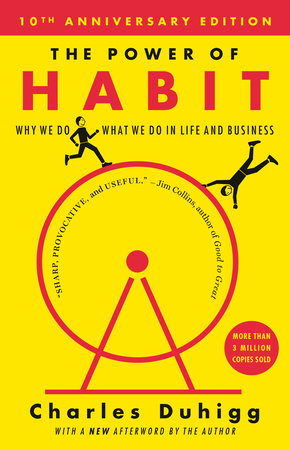
The Power of Habit
This is the explanatory selection for seeing why a routine keeps repeating even when the conscious intention has changed. Duhigg uses reported stories and research to explain cues, routines, rewards, cravings, keystone habits, and the ways repeated patterns can shape organizations as well as individuals. It gives readers a vocabulary for diagnosing a loop before trying to replace it.
Why it belongs here
A behavior is easier to change when the cue and the reward are made visible. The book helps move the question from “Why am I weak?” to “What starts this sequence, what response follows, and what need is the reward actually serving?”
Know before reading
This is a narrative survey rather than a daily workbook, and habit science has continued to develop since its original publication. Use the loop as a diagnostic lens, not a complete theory of every behavior, and seek qualified help for addiction or other serious conditions.
- Record the time, place, emotion, people, and action around a recurring cue.
- Test different rewards to identify what the routine is providing.
- Keep a useful cue and reward while rehearsing a safer replacement routine.
- Look for a keystone behavior that improves several connected routines.
of 07
Hardcover, ebook, and audio editions available
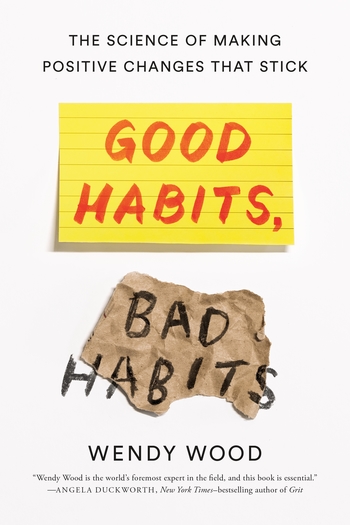
Good Habits, Bad Habits
This is the research-led selection for understanding how context and friction make behavior automatic. Wood draws on decades of habit research to show why intention and willpower often lose to stable cues, easy repetition, and familiar environments. The practical implication is direct: shape the path around the behavior rather than repeatedly negotiating with yourself at the moment of action.
Why it belongs here
Environment design becomes especially important when motivation fluctuates. The book explains how stable context, repeated rewards, and low friction allow a useful action to require less conscious control—and how adding friction can interrupt an unwanted routine.
Know before reading
It spends more time explaining the science than offering a numbered daily program. Context changes can also disrupt good habits, so travel, a new job, illness, or a move may require deliberate rebuilding even when the underlying goal has not changed.
- Repeat the behavior in a stable context whenever possible.
- Remove steps, delays, and decisions from the desired action.
- Add distance or inconvenience between the cue and an unwanted routine.
- Use life transitions to redesign cues before old patterns settle again.
of 07
Hardcover, ebook, and audio editions available
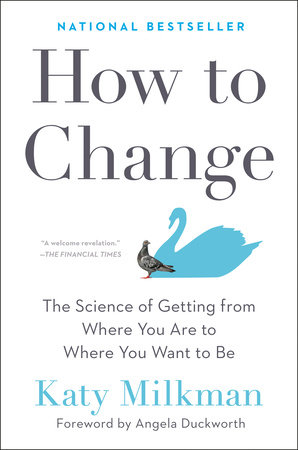
How to Change
This is the diagnostic selection for matching the intervention to the obstacle instead of applying one rule to every failed attempt. Milkman organizes behavior-change research around barriers such as impulsivity, procrastination, forgetfulness, laziness, and low confidence. Fresh starts, temptation bundling, commitment devices, reminders, and social influence become tools with particular jobs.
Why it belongs here
A habit plan fails when it treats the wrong bottleneck. The book encourages the reader to identify what is actually stopping the behavior, then choose a strategy that changes that barrier rather than collecting generic motivation tips.
Know before reading
A nudge can help a workable behavior happen, but it cannot solve every structural problem. Time poverty, inaccessible environments, unsafe work, financial strain, discrimination, illness, and caregiving demands may require resources, accommodation, or policy—not just a clever prompt.
- Name the specific barrier before choosing a behavior-change tool.
- Use a meaningful fresh-start moment to begin a new chapter.
- Pair an enjoyable temptation with a beneficial action when appropriate.
- Add reminders, commitments, advice, or social support for the obstacle at hand.
of 07
Paperback, ebook, and audio editions available
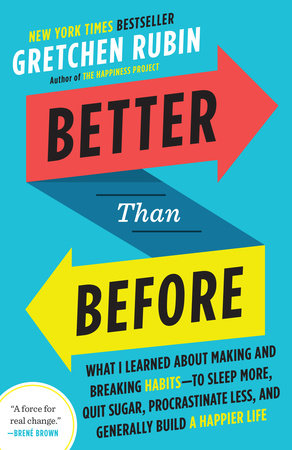
Better Than Before
This is the personalization selection for readers who have discovered that someone else's perfect routine does not fit them. Rubin compares strategies involving expectations, monitoring, scheduling, accountability, convenience, pairing, safeguards, and the distinction between abstaining and moderating. Her Four Tendencies framework asks how a person responds to inner and outer expectations.
Why it belongs here
Habit advice works differently across people and circumstances. The book helps readers choose forms of accountability, scheduling, and constraint that match their real behavior instead of copying a system built for a different temperament.
Know before reading
The Four Tendencies is a practical self-reflection lens, not a clinical diagnosis or a fixed scientific identity. Use a label to test better strategies—not to excuse harmful behavior, box yourself in, or assume that every preference is permanent.
- Notice how you respond to inner and outer expectations.
- Choose accountability that supports action without creating shame.
- Decide honestly whether moderation or abstention is easier for a behavior.
- Use personal distinctions as experiments rather than permanent labels.
of 07
Paperback, ebook, and audio editions available
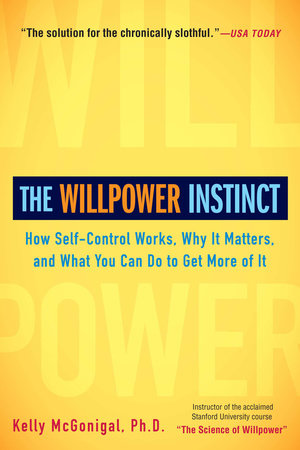
The Willpower Instinct
This is the self-control selection for understanding what happens when stress, attention, emotion, and immediate reward collide with a longer-term intention. McGonigal presents willpower as a mind-body process rather than a moral virtue, using exercises around awareness, breathing, sleep, stress, self-compassion, and social influence to make urges easier to observe before acting.
Why it belongs here
Habit change often collapses after a lapse because guilt becomes another trigger. The book is especially useful for recognizing an urge without immediately obeying it, supporting the body conditions that make restraint easier, and treating a setback as information rather than proof of failure.
Know before reading
Some claims and metaphors about willpower remain debated, and the exercises should be adapted to the reader's health and circumstances. The book is not treatment for addiction, eating disorders, obsessive-compulsive symptoms, or another clinical condition.
- Observe the urge, body state, and promised reward before responding.
- Create a brief pause with slower breathing or a change of context.
- Protect sleep, movement, nutrition, and stress recovery where possible.
- Respond to a lapse with analysis and self-compassion instead of collapse.
Choose the right first habit book
You do not need to read every book in order. Use these three common habit-building obstacles to choose the most useful entry point after reviewing the complete list.
Atomic Habits
Choose this for a practical framework joining identity, cues, environment, friction, repetition, tracking, and recovery.
Tiny Habits
Choose this when plans are too large to begin reliably and you need a tiny action, a stable anchor, and immediate reinforcement.
The Power of Habit
Choose this when you need to identify the cue, routine, reward, craving, and keystone patterns behind repeated behavior.
Adapt habit advice for disability, illness, medication, sleep, caregiving, work conditions, access, and safety. These books can support reflection and practice, but they do not replace qualified care for addiction, eating disorders, obsessive-compulsive symptoms, ADHD, depression, anxiety, or another health condition. No method guarantees permanent behavior change.
Why these seven books
BeeVaults built a complementary behavior-change pathway instead of stacking seven versions of the same productivity advice. The sequence moves from system design and tiny starts into habit-loop diagnosis, context and friction, obstacle-specific tools, individual fit, and the role of stress, urges, and recovery after a lapse.
Related BeeVaults entries
Continue from daily behavior design into emotional discipline, practical AI learning, and no-code workflow systems.
Before choosing a habit book
Which habit book should a beginner read first?
Start with Atomic Habits for a complete, flexible system. Choose Tiny Habits if beginning consistently is the main problem, or The Power of Habit if understanding cues, routines, and rewards will help you diagnose an existing pattern.
How long does it take to build a habit?
There is no universal 21-day, 30-day, or 66-day guarantee. Time varies with the behavior, person, repetition, context, difficulty, and disruption. Look for increasing consistency and automaticity rather than treating one calendar deadline as a pass-or-fail test.
What should I do after missing a habit?
Resume at the next realistic opportunity, shrink the next step if necessary, and inspect the cue, friction, timing, energy, and environment. One lapse is data; turning it into a judgment about your identity makes the next action harder.
Can habit books help with addiction or mental health conditions?
They can offer supporting ideas, but they are not a substitute for licensed care or evidence-based treatment. Addiction, eating disorders, obsessive-compulsive symptoms, ADHD, depression, anxiety, and other health conditions can require individualized professional support.
Have a digital publication to document?
Create a BeeVaults listing for your e-book, manual, guide, report, or digital knowledge product.